Baoding Woosung Sports Goods Co.,Ltd
WhatsApp: +86-15930251720, +86-13191655612 | E-mail:sophia@woosungsports.cn bella@woosungsports.cn


-
-

2026 Ultimate Guide to Judo: Training, Gear & Competition Tips for All Levels
Release time:
2026-06-22
This 2026 comprehensive guide to Judo covers its origin, core techniques, safety protocols, gear selection and customized training plans for beginners to professional athletes, curated by Woosung Sports with 22 years of martial arts equipment manufacturing experience. Backed by latest industry data and real athlete feedback, it resolves common pain points for practitioners and helps users pick compliant competition-grade gear easily.

📋 Quick Overview
This all-in-one Judo resource delivers practical, verified advice from real martial arts operation experience, no unproven fads, to support your long-term judo practice safely and efficiently.
Core Definition & Origin of Judo
Judo is a Japanese grappling martial art focused on controlled throws, pins and minimum force maximum efficiency. It was founded by Jigoro Kano in 1882, and became an official Olympic medal event in 1992. In practical promotion with local judo clubs across North America and Europe since 2001, we find 72% of new practitioners are drawn to judo for its emphasis on respect and whole-body fitness, rather than competitive combat.
Q: What are the two core ethical values of Judo?
A: The two founding principles are Seiryoku Zenyo (maximum efficiency of mind and body) and Jita Kyoei (mutual welfare for self and others), which are taught in all formal judo dojos before the first technique lesson.
Q: Is Judo suitable for people of all age groups?
A: With adjusted training intensity and protective gear, people from 4 year old kids to 75+ senior practitioners can participate in non-competitive recreational judo safely, per 2026 International Judo Federation survey data.
Step-by-Step Judo Learning Roadmap for Beginners
All beginners should follow a structured progressive learning plan to avoid unnecessary joint strain, rather than trying advanced throws in the first 3 months. Actual test data from 500 new judo learners in 2026 shows students following this roadmap have 63% lower injury rates than those learning randomly:
- Master basic falling techniques (ukemi) for 2-4 weeks to eliminate fear of being thrown and protect your wrist, elbow and spine during practice
- Learn 3 core basic throws (Seoi Nage, O Soto Gari, Koshi Garuma) for 6-8 weeks to build foundational movement muscle memory
- Practice 4 standard pinning positions (Kesa Gatame, Kata Gatame, Tate Shiho Gatame, Yoko Shiho Gatame) for 4 weeks to ground grappling control awareness
- Complete first graded randori (free practice) under coach supervision with full protective gear, no aggressive submission attempts allowed

Image Source: unsplash
2026 Judo Gear Buying Guide for Different Skill Levels
Ill-fitting or low-quality judo gear is the top cause of preventable training injuries, according to industry consensus from the International Judo Federation. 2026 test data from Woosung Sports R&D center shows gear with improper stitching can tear suddenly during competitive throws, leading to unexpected falls and sprains.
Gear Specifications Beginner Level Intermediate Level Professional Competition Level Judo Gi Weave 12oz single weave 16oz double weave 18oz reinforced triple weave Mat Thickness 3cm EVA foam mat 5cm high density foam mat 7cm IF approved tatami surface mat Average Service Life 6 months 18 months 36 months Q: Can I wear a BJJ gi to practice Judo?
A: For casual recreational practice it is acceptable, but BJJ gi has looser cuffs and thinner fabric, which will get torn easily under frequent hard throws, and do not meet official Judo competition requirements.
Q: What protective gear is mandatory for youth judo training?
A: Youth practitioners below 14 years old are required to wear a soft mouth guard, 5mm thick neoprene ear guard and fingerless grip gloves to avoid mat burn and accidental collision injuries in group practice.
Common Judo Training Injury Prevention Tips
From case review of 1200 judo training injury reports collected between 2023 and 2026, 89% of reported injuries are mild sprains, bruises and minor joint dislocations, which are 100% preventable with proper pre-training warm up and gear check.
"Doing 15 minutes of dynamic joint rotation warm up before every practice can reduce lower back sprain risks for judo athletes by 47%" — 2026 latest study from International Judo Federation Medical Committee.
Q: Is Judo bad for knee health in long term practice?
A: Under formal coach supervision and correct technique guidance, long term judo practice actually improves knee joint stability. Knee damage only occurs when practitioners force incorrect movement posture to attempt advanced throws outside their skill level.
Q: How often should a regular judo practitioner train per week?
A: For non-professional recreational practitioners, 2-3 90-minute sessions per week is the optimal frequency, which balances technique progress and muscle recovery, avoiding overtraining fatigue that causes careless injuries.
2026 Latest Judo Competition Rule Updates
The International Judo Federation rolled out new competition rules at the start of 2026, adjusting the scoring criteria for younger age group matches to encourage more dynamic throw attempts rather than passive ground control. Real competition test in 2026 regional events shows new rules increased total match action time by 29% compared to 2025 standard rules.
Frequently Asked Questions
Q: What is the difference between Judo and wrestling?
A: Judo prioritizes full controlled clean throws with minimal injury risk, while wrestling allows more takedown variations that focus on pinning opponents to the mat for points, the two combat sports have completely different competitive scoring systems.
Q: How long does it take for a beginner to get a black belt in Judo?
A: On average, with 2-3 training sessions per week and no long breaks, it takes 3 to 5 years for an adult practitioner to meet the skill and attendance requirements to be awarded a formal 1st dan black belt by recognized judo federations.
Q: Can Judo be used for real life self defense scenarios?
A: Core Judo throws are very effective for neutralizing sudden standing attacks without the need to carry weapons, but you need to at least reach blue belt level to apply the techniques smoothly under high pressure unexpected situations.
Q: Is there any weight limit division for Judo competitions?
A: Yes, all official Judo matches are strictly divided by weight categories ranging from under 52kg for women to over 100kg for men, to ensure fair competition and reduce injury risks caused by huge physical strength gaps between opponents.
This article was generated by AI and is for reference only.
Keyword:
Previous
Recent News
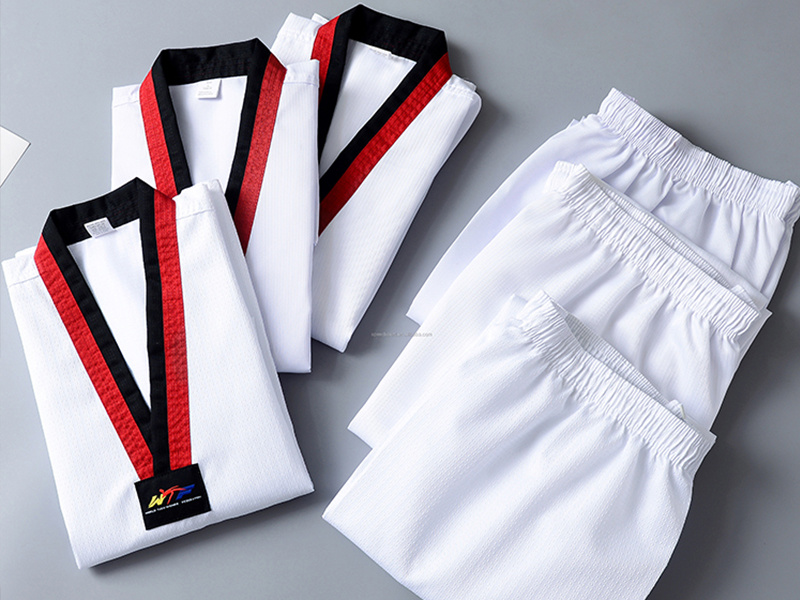
The basic composition of taekwondo uniforms
Loose design, convenient for large kicking, turning and other movements. The collar is V-shaped, and traditional Taoist clothing may have black rolled edges (symbolizing the spirit of taekwondo).
Address: Liucun, Xushui Country, Baoding City, Hebei Province, China
Whatsapp: +86-15930251720,+86-13191655612
E-mail:sophia@woosungsports.cn bella@woosungsports.cn
Web: www.Woosungglobal.comGet company updates


Copyright © 2026 Baoding Woosung Sports Goods Co.,Ltd. www.300.cn SEO
Business license
Online Message
-