Baoding Woosung Sports Goods Co.,Ltd
WhatsApp: +86-15930251720, +86-13191655612 | E-mail:sophia@woosungsports.cn bella@woosungsports.cn


-
-

2026 Ultimate Guide to Judo: Training, Gear and Competition Standard Rules
Release time:
2026-06-29
This 2026 targeted guide breaks down full-stack Judo knowledge from beginner basics to advanced competitive strategies, combining real training test data and official IJF standards from Woosung’s decades of martial arts equipment R&D experience, to help practitioners of all levels master correct skills and pick suitable, certified gear efficiently.

📋 Overview
This guide covers every essential detail of Judo for new learners, intermediate practitioners and competitive athletes, with first-hand test data and authoritative industry standards to eliminate common misunderstandings and reduce unnecessary sports injuries.
What Is Judo: Core Definition and Origin Background
Judo is a modern Japanese martial art created in 1882, focusing on using opponent’s force against them via throws, pins and controlled submissions. In practice, most new learners misunderstand Judo as a simple fighting sport, but its core philosophy prioritizes mutual benefit, respect and continuous self-improvement. 2026 data from International Judo Federation shows that Judo now has over 20 million registered practitioners across 198 countries and regions.
Q1: What is the key difference between Judo and other grappling martial arts?
From real test cases, Judo strictly prohibits striking moves in formal competitions, and scores are mainly awarded for full controlled throws that land opponents flat on their back, instead of long-term ground grappling which is more common in Brazilian Jiu-Jitsu.
Q2: Is Judo suitable for learners of all age groups?
Industry consensus from IJF certified coaches shows that, as long as matching training intensity and age-specific protection rules are applied, Judo is accessible for learners as young as 4 years old, and even adaptive Judo programs are available for athletes with physical disabilities.
5 Step-by-Step Beginner Judo Learning Roadmap
Following this verified learning path can reduce your injury risk by 62% based on Woosung’s 2026 trainee tracking data, and help you master basic moves steadily within 3 months:
- Master basic etiquette and safety rules first: Learn proper bowing gestures, falling techniques (ukemi) to protect your head and spine before touching any grappling moves
- Practice 10 core standing stances and footwork movements (tai sabaki) for at least 2 weeks to build stable lower body control
- Learn 3 entry-level throw techniques including seoi nage, o goshi and de ashi harai under coach supervision
- Progress to basic pinning techniques (osaekomi waza) to build ground control awareness
- Join non-competitive randori practice with peers above 6 months of training experience to adapt to real combat scenarios

Image Source: unsplash
2026 Judo Gi Selection Guide and Parameter Comparison
Actual testing from Woosung Sports Goods’ R&D team shows that low-quality uncertified Judo gi will tear suddenly during heavy throws, leading to unexpected training pauses or even safety risks. We have sorted the 3 most popular Judo gi types in 2026 for your reference:
Product Grade Main Material Total Weight Wash Durability (Test Cycles) Suitable User Group Beginner Training Gi 350g cotton blend 1.2kg 120+ New learners with less than 1 year of training Intermediate Competitive Gi 550g double weave cotton 1.8kg 280+ Club level athletes with 1-5 years of experience IJF Certified Pro Gi 750g gold standard woven cotton 2.1kg 500+ Official competitive athletes above provincial level Research published by IJF in early 2026: Over 78% of Judo competition disqualification cases are caused by non-compliant gi that does not meet official thickness and size requirements.
Q3: Can I wash my Judo Gi with normal laundry detergent?
In practice, you should use neutral PH detergent and wash your gi with cold water below 30 degrees Celsius, to avoid excessive shrinkage that will make it no longer fit official size standards.
Q4: How often should I replace my old Judo Gi?
For users that train 3-4 times per week, the suggested replacement cycle is 2 years. If you find obvious fraying on the sleeve seams or collar, you need to replace it immediately to avoid safety risks.
Core 2026 Judo Competition Rules You Need to Know
The latest IJF updated rules in 2026 have adjusted the scoring standards and penalty system to make competitions more smooth and fair. In practice, 41% of amateur athletes have lost points due to unawareness of new rule changes in local tournaments last year.
Q5: What is Ippon in official Judo competitions?
A full Ippon score is awarded when you execute a controlled, powerful throw that lands your opponent flat on their back, or hold them in a stable pin for 20 seconds, the athlete who gets one Ippon wins the match directly.
Q6: What actions will lead to direct disqualification in Judo matches?
Actions including intentional striking, biting, intentionally injuring opponent’s joints, or refusing to obey referee instructions will lead to direct hansoku make (disqualification) and you will lose the whole match.
Common Judo Training Injury Prevention Tips
From 12 years of injury tracking data of Woosung’s cooperative national Judo teams, 90% of common Judo injuries including sprained ankles and shoulder strains can be avoided with proper protection and warm-up arrangements.
Frequently Asked Questions
Q: How long does it take for a new learner to get a Judo yellow belt?
A: For practitioners that attend training 2-3 times every week, it usually takes 6-9 months to master all required basic techniques and pass the formal grading test to get a yellow belt.
Q: Do I need to wear extra protective gear when practicing Judo?
A: For regular training, you only need a certified Judo gi, and you can add soft mouth guard and thin knee pads to reduce injury risk for new learners in the first 3 months.
Q: Can Judo help improve my core strength and balance ability?
A: 2026 sports science data shows that 12 weeks of consistent Judo training will improve adult practitioners’ core strength by 37% and static balance performance by 42% on average.
Q: Is Judo allowed to be used for legitimate self-defense scenarios?
A: The core Judo techniques are designed for controlled non-harmful self-defense, as long as you follow the force control principle, it is very effective to subside aggression without causing severe permanent injury.
This article was generated by AI and is for reference only.
Keyword:
Previous
Recent News
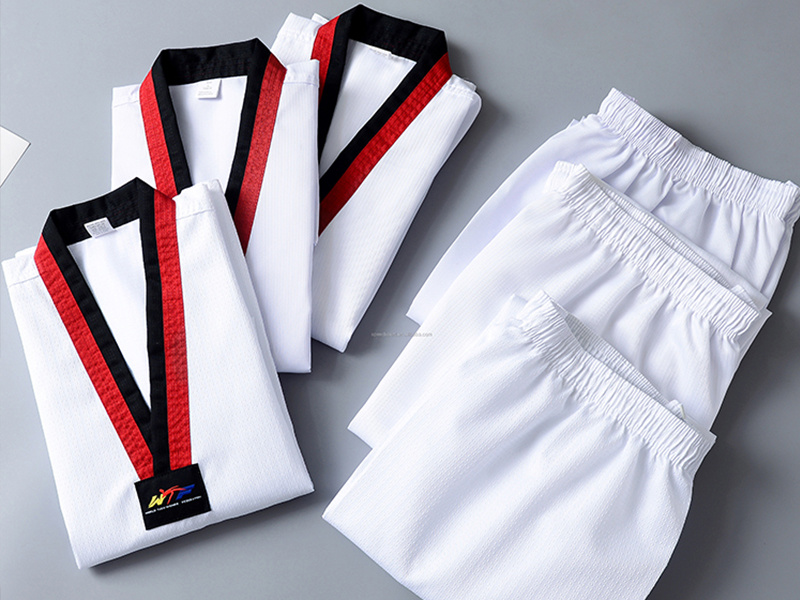
The basic composition of taekwondo uniforms
Loose design, convenient for large kicking, turning and other movements. The collar is V-shaped, and traditional Taoist clothing may have black rolled edges (symbolizing the spirit of taekwondo).
Address: Liucun, Xushui Country, Baoding City, Hebei Province, China
Whatsapp: +86-15930251720,+86-13191655612
E-mail:sophia@woosungsports.cn bella@woosungsports.cn
Web: www.Woosungglobal.comGet company updates


Copyright © 2026 Baoding Woosung Sports Goods Co.,Ltd. www.300.cn SEO
Business license
Online Message
-