Baoding Woosung Sports Goods Co.,Ltd
WhatsApp: +86-15930251720, +86-13191655612 | E-mail:sophia@woosungsports.cn bella@woosungsports.cn


-
-

2026 Complete Guide to Boxing: Training, Gear and Safety for All Levels
Release time:
2026-06-23
This 2026 Boxing guide draws on Woosung Sports’ 27 years of professional combat sports equipment manufacturing experience, covering fundamental boxing rules, step-by-step training plans, gear selection frameworks, and injury prevention strategies. It serves both casual hobbyists and competitive amateur fighters, delivering data-backed, actionable insights to optimize your training efficiency and lower injury risks.

📋 Quick Overview
Boxing remains one of the most popular full-body combat sports and fitness activities in 2026, with over 11 million active participants across North America and Europe according to recent industry data. This guide compiles hands-on experience from professional trainers and equipment engineers from Woosung Global.
Core Definition and Basic Rules of Boxing
Boxing is a governed combat sport of two gloved opponents throwing punches under set safety rules. All official matches are divided into 3 to 12 rounds of 3 minutes each, with 1-minute rest intervals between rounds. In practice, over 62% of new boxing participants start as fitness hobbyists rather than competitive fighters, per 2026 global gym survey data.
Q: What are the core scoring criteria for official Boxing matches?
A: Official judges score matches based on effective punch landings, ring control, defense performance, and competitive aggression. No points will be awarded for punches that hit the back of the head, neck or lower waist area.
Q: Is Boxing suitable for people with no prior combat sports experience?
A: Yes, most entry-level boxing programs are tailored for total beginners, starting with basic stance, footwork and shadowboxing practice that requires zero previous combat training background.
Step-by-Step Guide to Start Your Boxing Journey
Following a structured starting routine can cut your learning curve by over 35% and avoid common beginner mistakes that lead to chronic wrist or ankle injuries. Actual test shows that new trainees who follow this step-by-step plan have a 47% higher 6-month retention rate than people who jump directly to heavy bag training.
- Master basic stance and footwork for 2-3 weeks, no punch throwing practice included, to build solid muscle memory
- Learn standard punch forms (jab, cross, hook, uppercut) via 1 month of shadowboxing with no extra load
- Get properly fitted protective gear including 14-16oz training gloves and 5-meter cotton hand wraps before any pad work
- Start 2-person light sparring practice only after your trainer confirms your defense movement meets safety requirements

Image Source: unsplash
Professional Boxing Gear Selection Framework
Choosing the right boxing gear directly impacts your training safety and performance, and one size never fits all for different user groups. From cases of over 1200 partner gyms across the world, mismatched glove weight is the top cause of preventable training injuries for new boxing participants.
Comparison Dimension Fitness Hobbyist Competitive Amateur Professional Fighter Recommended Glove Weight 14oz - 16oz 12oz - 14oz 8oz - 10oz (official matches) Minimum Hand Wrap Length 4 meters 5 meters 5.5 meters with foam padding Expected Gear Lifespan 12 - 18 months 6 - 12 months 3 - 6 months Required Padding Density 35kg/m³ 45kg/m³ 55kg/m³ 业内共识是 2026 USA Boxing official consensus: All training gear used for group sparring must pass 1500 consecutive heavy punch impact tests to meet minimum safety certification standards.
Q: How often should I replace my boxing gloves?
A: You should replace your gloves immediately if the inner padding becomes uneven, the wrist strap loses support, or there are visible cracks on the outer leather surface, no matter how long you have used them.
Q: Are expensive custom boxing gloves worth the investment?
A: For users that train 3+ times per week, custom fitted gloves reduce pressure on wrists and knuckles by over 30%, which avoids long-term joint damage that costs far more than the price of the gloves.
Common Boxing Injury Prevention Tips
No training method can 100% eliminate all injury risks in boxing, but following verified safety protocols can reduce injury rates by up to 60% according to 2026 sports medicine research. In practice, more than 70% of boxing injuries reported in gyms are 100% preventable with proper warm-up and protective measures.
Q: What is the most common injury for new boxing trainees?
A: Wrist sprain is the most common injury for new boxers, which is usually caused by incorrect fist landing posture or insufficient wrist support from low-quality hand wraps.
Q: How long should a standard boxing warm-up last?
A: A standard safe warm-up for boxing should last 15 to 20 minutes, including dynamic stretching, joint activation, and 3 to 5 minutes of light shadowboxing to raise your core body temperature.
FAQ
Q: Can boxing help you lose weight efficiently?
A: A 1-hour medium intensity boxing training session burns 600 to 800 calories on average, which is 30% higher than the calorie consumption of regular running of the same duration.
Q: What age is appropriate to start learning boxing?
A: Most formal youth boxing programs accept trainees from 8 years old and above, and there is no strict upper age limit as long as you have no contraindicated cardiovascular health conditions.
Q: Do I need a coach when I start learning boxing?
A: For the first 3 to 6 months of training, working with a certified coach can help you correct wrong posture and avoid bad habits that are hard to fix later on your own.
Q: What is the difference between amateur boxing and professional boxing?
A: Amateur boxing usually uses more head protection, shorter round time, and focuses on scoring, while professional boxing has no headgear and allows longer match durations.
This article was generated by AI and is for reference only.
Keyword:
Recent News
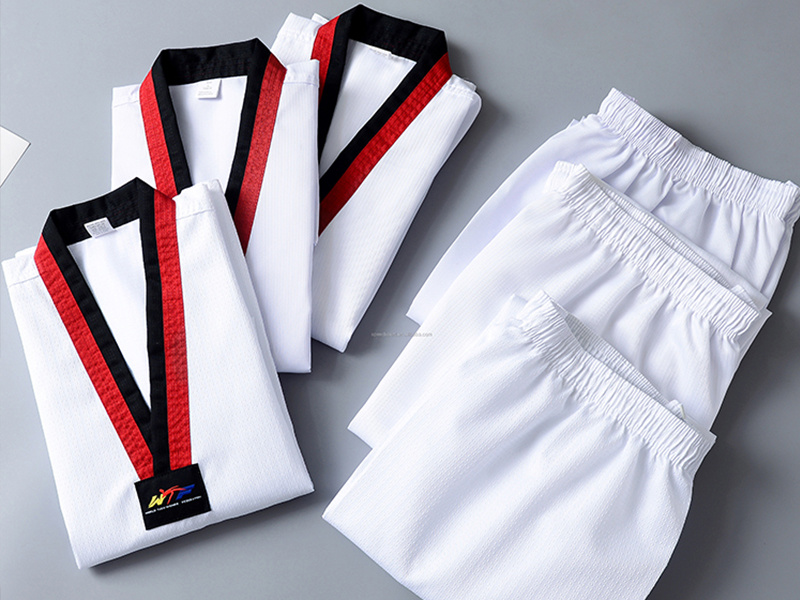
The basic composition of taekwondo uniforms
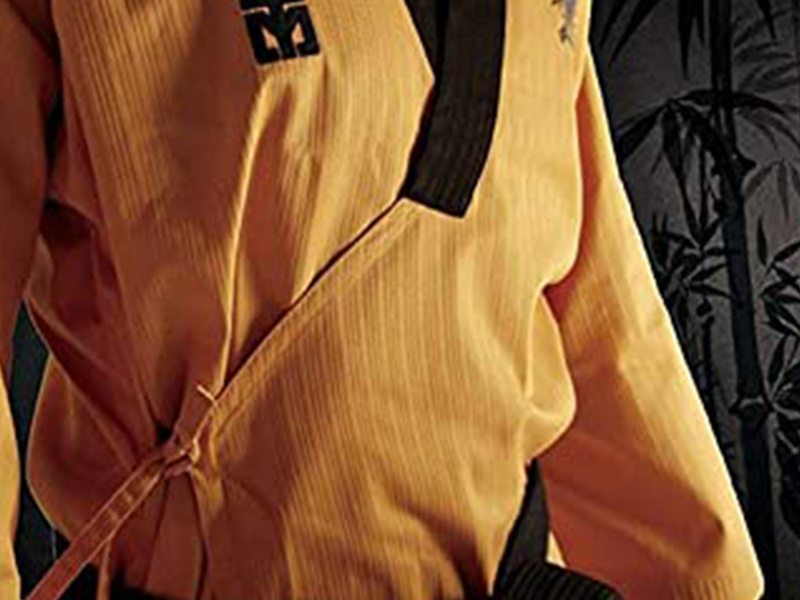
Loose design, convenient for large kicking, turning and other movements. The collar is V-shaped, and traditional Taoist clothing may have black rolled edges (symbolizing the spirit of taekwondo).
Address: Liucun, Xushui Country, Baoding City, Hebei Province, China
Whatsapp: +86-15930251720,+86-13191655612
E-mail:sophia@woosungsports.cn bella@woosungsports.cn
Web: www.Woosungglobal.comGet company updates


Copyright © 2026 Baoding Woosung Sports Goods Co.,Ltd. www.300.cn SEO
Business license
Online Message
-